

Medical Translation Services UK: Complete NHS, GMC & MHRA Regulatory Compliance Guide 2026
1. Executive Summary: Clinical Precision and Legal Standards in UK Healthcare
In the United Kingdom healthcare ecosystem, accurate clinical communication directly affects patient morbidity, diagnostic efficacy, and legal liability. Medical translation services uk operate at the high-stakes intersection of international medicine, statutory health regulations, and clinical jurisprudence. Unlike generic corporate document translation, translating a medical discharge summary, an oncology clinical trial protocol, or an Investigational Medicinal Product Dossier (IMPD) demands an absolute degree of linguistic and anatomical precision. A misplaced decimal point in a drug dosage, an imprecise anatomical descriptor, or an ambiguous translation of an adverse event can lead directly to catastrophic clinical outcomes, medical malpractice claims, or regulatory rejection by UK health authorities.
Every year, the National Health Service (NHS), private healthcare groups like Bupa and Spire Healthcare, and global pharmaceutical research sponsors process hundreds of thousands of non-English clinical records. These documents include foreign medical histories of international patients seeking tertiary care in London, qualifications of overseas medical graduates registering with the General Medical Council (GMC) or the Nursing and Midwifery Council (NMC), and multi-centre international clinical trial data submitted to the Medicines and Healthcare products Regulatory Agency (MHRA). In every instance, UK authorities refuse uncertified or machine-generated translations. Instead, they mandate certified medical documents translation completed by subject-matter expert linguists working under strict quality management frameworks such as ISO 17100:2015 and ISO 13485:2016.
The term med translate encompasses a broad spectrum of clinical and linguistic disciplines. It covers everything from bedside healthcare translation that bridges patient-doctor dialogues in acute emergency settings to complex regulatory submissions for novel biologics. This exhaustive technical guide outlines the statutory requirements, regulatory guidelines, clinical methodologies, and quality assurance workflows necessary to execute medical translation in the UK in 2026.
2. The Statutory and Regulatory Landscape Governing UK Medical Translation
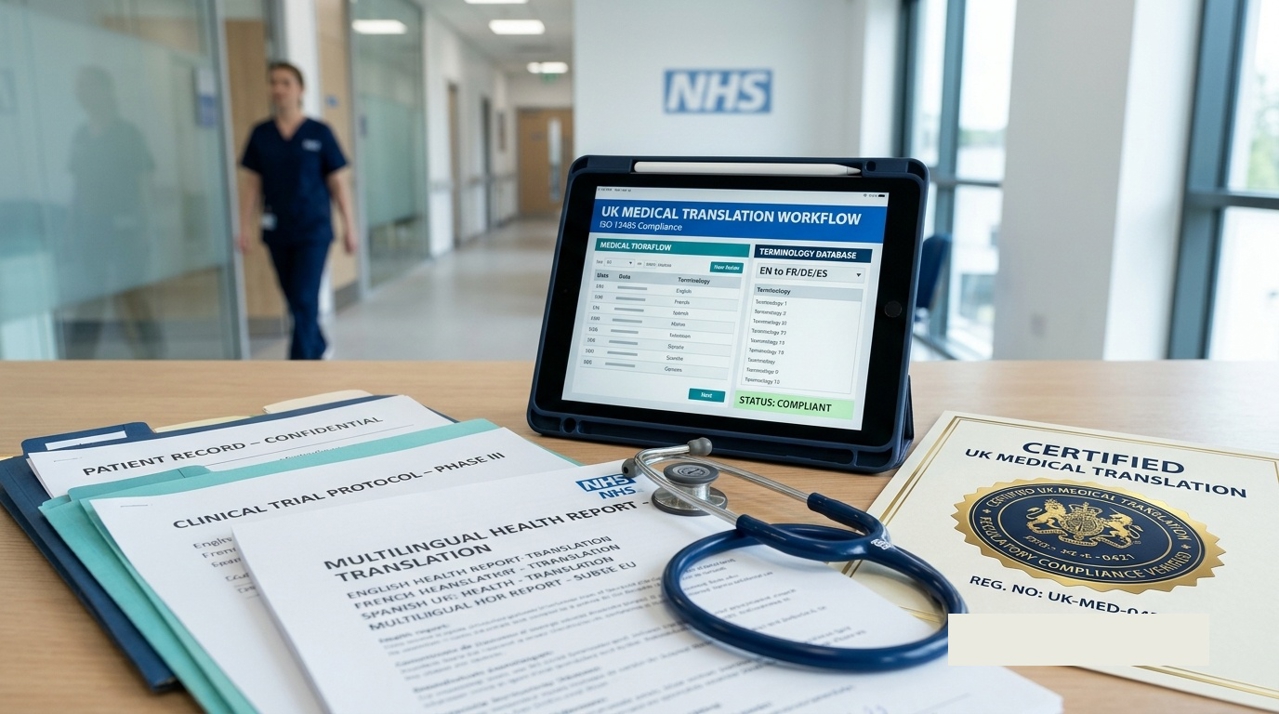
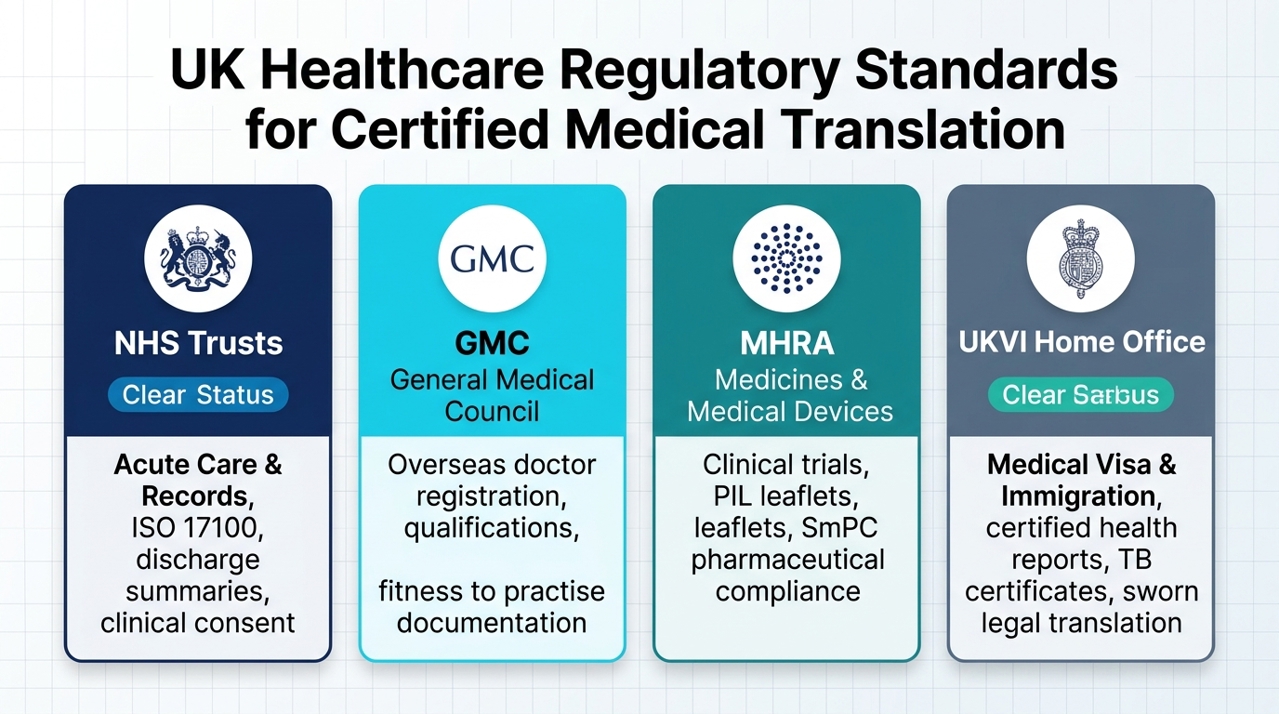
The practice of medical and healthcare translation in the United Kingdom is regulated by an intricate network of statutory instruments, professional regulatory guidelines, and international quality standards. Translation providers and clinical bodies must navigate four primary regulatory frameworks:
A. NHS England and Crown Commercial Service (CCS) Standards
NHS England operates under strict clinical governance protocols established by the Health and Social Care Act 2012 and subsequent operational mandates. When NHS hospital trusts, integrated care boards (ICBs), and foundation trusts procure medical translation services uk, they rely primarily on the Crown Commercial Service Language Services Framework (RM6141). This procurement standard mandates that all linguists handling clinical text must hold recognised postgraduate qualifications in medical translation, maintain registered membership with the Chartered Institute of Linguists (CIOL) or the Institute of Translation and Interpreting (ITI), and possess a minimum of three years of verified clinical translation experience.
Under NHS guidelines, diagnostic radiology reports, surgical operation notes, and laboratory pathology findings cannot simply be summarized or loosely translated. Every line item, reference range, pathological grading scale, and clinical remark must be faithfully rendered into British English using standardised UK terminology (such as SNOMED CT). Any regional colloquialism or source-language ambiguity must be flagged in formal translator footnotes rather than silently interpreted.
B. General Medical Council (GMC) Registration Requirements
International Medical Graduates (IMGs) who complete their primary medical qualification (PMQ) outside the UK or the European Economic Area must register with the General Medical Council before practicing medicine in the NHS. The GMC applies rigorous criteria to foreign-language medical credentials. Under official GMC standards, any document not issued natively in English (including medical degree certificates, transcripts of clinical training, certificates of good standing, and specialist registration diplomas) must be accompanied by a certified English translation.
The GMC mandates that translations must be executed by a professional translation company or a certified translator affiliated with recognised bodies like CIOL or ITI. The translation must incorporate a formal declaration of accuracy, the certifier contact details, the professional registration number, and an unbroken translation seal. Any discrepancies between the original institutional terminology and the translated credential can prompt the GMC to issue a formal request for clarification, delaying registration by months.
C. Medicines and Healthcare products Regulatory Agency (MHRA) Regulations
As the UK standalone regulator for medicines, medical devices, and clinical investigations following the UK withdrawal from the European Union, the MHRA enforces strict linguistic mandates under the Human Medicines Regulations 2012 (SI 2012/1916 as amended). Pharmaceutical sponsors submitting Marketing Authorisation Applications (MAAs) or Clinical Trial Authorisations (CTAs) must provide all technical dossiers, Investigator Brochures, and summary of product characteristics (SmPC) in clear, unambiguous English.
When foreign patient reports or safety data from international study sites are included in safety update reports, the MHRA requires full medical documents translation executed under Good Clinical Practice (GCP) principles. Pharmacovigilance safety signals require rapid turnaround, often within 7 to 15 calendar days, necessitating 24/7 technical medical translation capabilities.
D. ISO 17100:2015 and ISO 9001:2015 Quality Standards
Top-tier providers of healthcare translation adhere strictly to ISO 17100:2015, the international benchmark for translation services. ISO 17100 dictates the complete translation lifecycle, requiring a mandatory two-tier workflow consisting of primary translation by a qualified linguist followed by independent revision by a second specialist linguist. In high-risk medical contexts, Lang247 enhances this standard by adding a third tier: clinical reconciliation by a licensed medical practitioner.
3. Clinical Document Typologies and Specialised Translation Protocols
Medical translation is not a monolithic discipline; distinct categories of clinical literature demand highly specialized linguistic and medical knowledge. The primary document typologies encountered in UK healthcare translation include:
| Clinical Document Category | Primary Source Content | Target Audience | Primary Regulatory Risk | Required Methodology |
|---|---|---|---|---|
| Hospital Discharge Summaries & Inpatient Records | Clinical admission notes, bedside vitals, surgical logs, histology, discharge medications | NHS treating physicians, clinical nurse specialists, GPs | Medication reconciliation errors, missed allergies, misidentified surgical procedures | Dual specialist translation + SNOMED CT terminology mapping |
| Clinical Trial Protocols & IMPD Files | Inclusion/exclusion criteria, pharmacokinetic curves, dosing schedules, statistical analysis plans | MHRA inspectors, Research Ethics Committees (RECs), principal investigators | Trial suspension, regulatory refusal, unblinded safety protocol breaches | Forward translation + Blind back-translation + Expert reconciliation |
| Informed Consent Forms (ICFs) & Patient Information Leaflets (PILs) | Study risks, procedural explanations, voluntary participation terms, withdrawal clauses | Lay patients, clinical trial participants, legal guardians | Informed consent invalidation, legal action, patient distress, ethical violations | Lay-language transadaptation + Cognitive debriefing + Readability testing |
| Pharmacovigilance & Adverse Drug Reaction (ADR) Reports | Individual Case Safety Reports (ICSRs), Council for International Organizations of Medical Sciences (CIOMS) forms | MHRA Yellow Card Scheme evaluators, global safety review boards | Failure to report serious adverse events (SAEs) within statutory deadlines (7/15 days) | 24-hour express medical translation + MedDRA coding validation |
| Medical Imaging & Pathology Reports | MRI/CT scan interpretations, biopsy histopathology, immunohistochemistry stain descriptions | Consultant radiologists, oncologists, multi-disciplinary teams (MDTs) | Diagnostic delay, misclassification of malignant vs benign neoplasms | Sub-specialty medical linguist (such as neuro-radiology specialist) |
Deep-Dive into Patient Records and Discharge Summaries
When an international patient arrives in the UK requiring emergency cardiac bypass surgery or complex oncology care, their foreign medical records are often handwritten, heavily abbreviated, and structured around regional clinical practices. For example, medical records originating in France, Germany, Spain, or Latin America frequently utilize medical shorthand that does not correspond directly to UK conventions. In French clinical notes, HTA stands for hypertension artérielle (high blood pressure), whereas an inexperienced general translator might confuse it with unrelated technical acronyms. In Spanish, insuficiencia cardíaca congestiva (ICC) must be accurately converted to congestive heart failure (CHF) while cross-verifying left ventricular ejection fraction percentages.
Specialized healthcare translation teams at Lang247 deconstruct these documents systematically. Every laboratory parameter is cross-checked against standard International System of Units (SI units) used in UK hospitals. For instance, blood glucose measured in milligrams per decilitre (mg/dL) in Southern Europe or the United States must either be translated with parenthetical conversion to millimoles per litre (mmol/L) used by NHS pathology labs, or flagged prominently to prevent disastrous insulin dosing errors.
4. The 5-Stage Clinical Translation and Dual Back-Translation Methodology
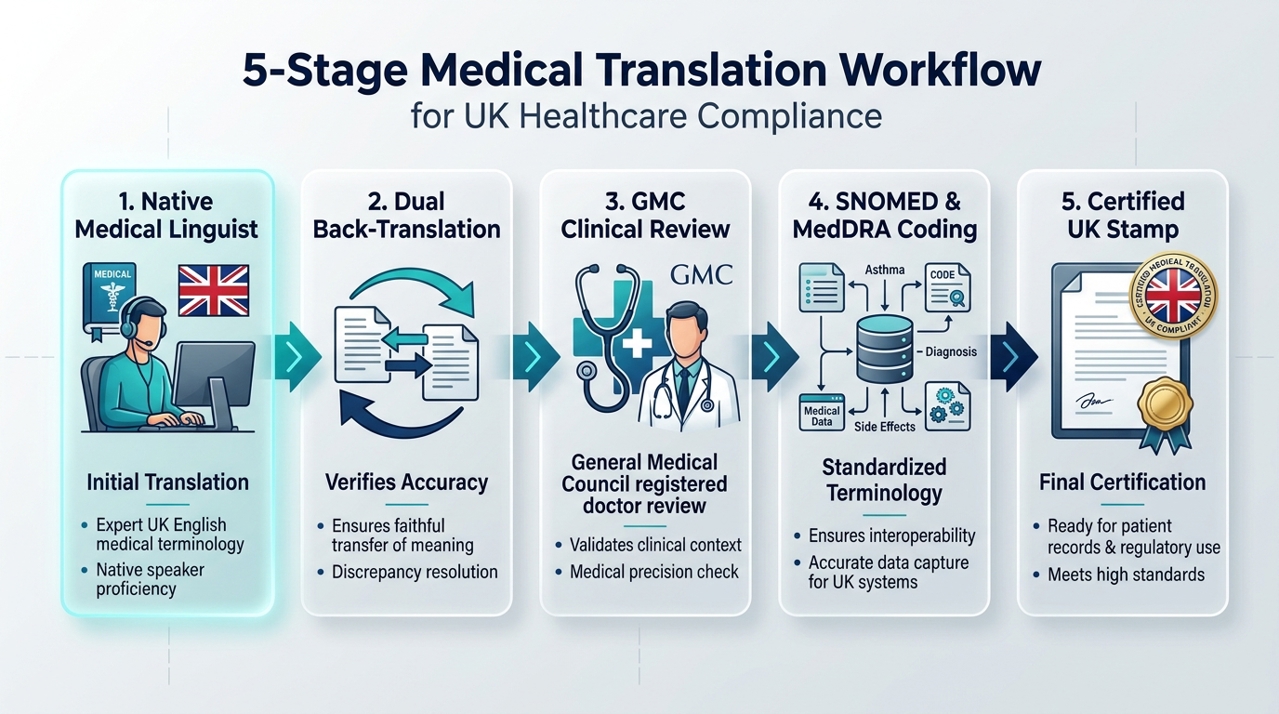
To achieve the near-zero error threshold demanded by the NHS and MHRA, professional medical translation services uk employ a rigorous 5-stage clinical translation protocol. This methodology exceeds basic translation processes by incorporating independent back-translation, clinical reconciliation, and terminology harmonization.
Stage 1: Primary Translation by Native Medical Subject-Matter Experts
The source document is assigned to a native target-language linguist holding an accredited degree in translation alongside verified academic training in life sciences, nursing, biochemistry, or medicine. The translator translates the text using dedicated computer-assisted translation (CAT) tools equipped with verified medical translation memories and institutional term bases. Every clinical concept, pharmaceutical name, and anatomical term is translated with surgical precision, avoiding informal synonyms.
Stage 2: Independent Dual Back-Translation (Blind Protocol)
Back-translation is the gold standard for clinical trial documentation, patient-reported outcome (PRO) measures, and high-risk surgical consent forms. In this stage, a second, completely independent medical translator who has never seen the original source text translates the Stage 1 English draft back into the original source language. Because this linguist works entirely blind to the original text, any semantic drift, ambiguity, or omitted nuances in Stage 1 will immediately surface as discrepancies in the back-translated document.
Stage 3: Clinical Reconciliation by a Registered Physician
A third clinical expert, typically a GMC-registered physician or a medical doctor fluent in both source and target languages, conducts a line-by-line reconciliation. The physician compares the original source document, the forward translation, and the back-translation side by side. If an inconsistency appears (such as a subtle shift between "moderate dyspnea on exertion" and "mild shortness of breath"), the clinician determines the clinical impact, adjusts the translation phrasing, and documents the rationale in a formal Reconciliation Audit Log.
Stage 4: Standardised Terminology Harmonisation (SNOMED CT & MedDRA)
UK health services rely on standardized clinical terminologies to enable interoperability across electronic patient record (EPR) systems. During Stage 4, the translated documentation is cross-referenced against two critical nomenclature databases:
- SNOMED CT (Systematised Nomenclature of Medicine Clinical Terms): The mandatory clinical vocabulary across NHS England. Diagnostic terms, surgical interventions, and body structures are verified against official SNOMED concept IDs to ensure full clinical compatibility.
- MedDRA (Medical Dictionary for Regulatory Activities): The global standard for pharmaceutical and regulatory communication. Adverse drug reactions, indications, and clinical study endpoints are mapped directly to preferred terms (PT) and system organ class (SOC) levels.
Stage 5: Statutory Certification, Quality Audit, and Embossed Stamping
The finalized translation undergoes formal technical verification by a quality assurance manager. The translation is formatted to mirror the structural layout, typography, and tabular arrangements of the source document. A formal Certificate of Translation Accuracy is affixed to the document bundle. This certificate contains the statutory declaration required by UK courts and government agencies, identifying the professional credentials of the linguists, the date of certification, company registration data, and the official embossed stamp of Lang247 Translation Services.
5. Clinical Risk Analysis: Case Studies of Translation Failures in Healthcare
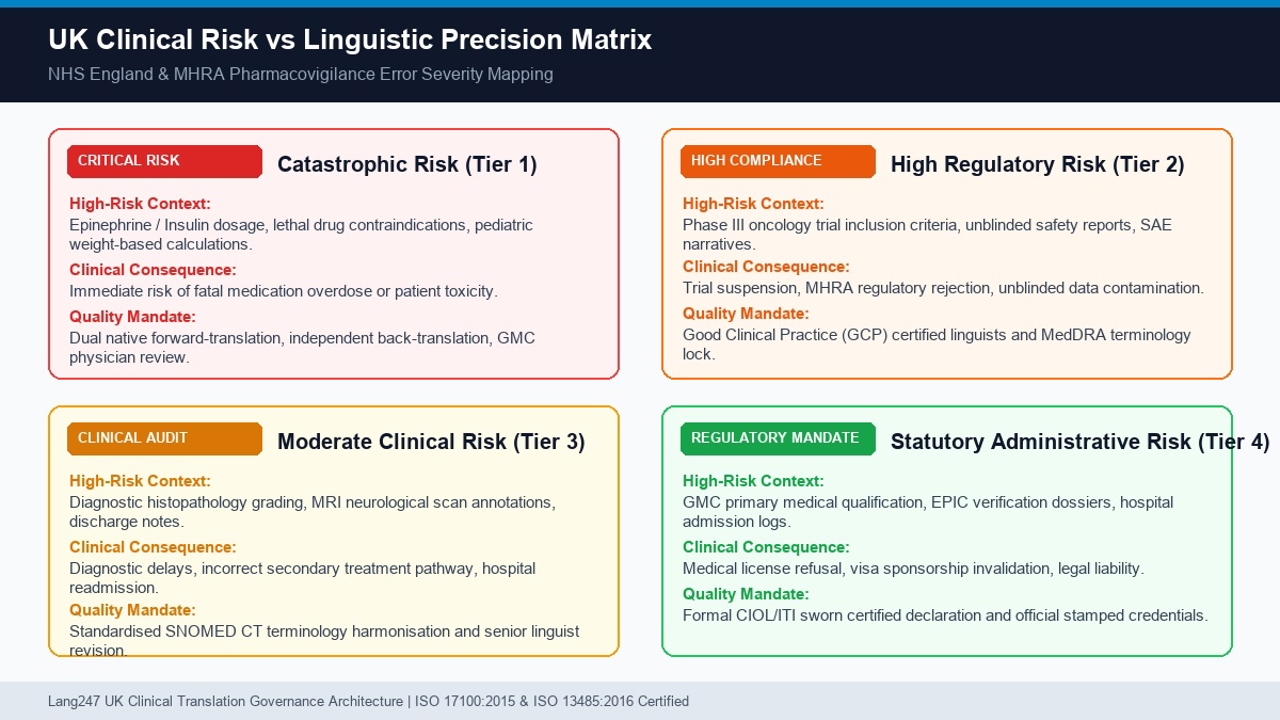
The necessity of specialized med translate workflows becomes starkly evident when reviewing historical clinical errors resulting from non-specialist or automated translations. Academic literature and medical liability registries document significant clinical consequences arising from linguistic failures:
Case Study 1: The Epinephrine Dosage Misinterpretation
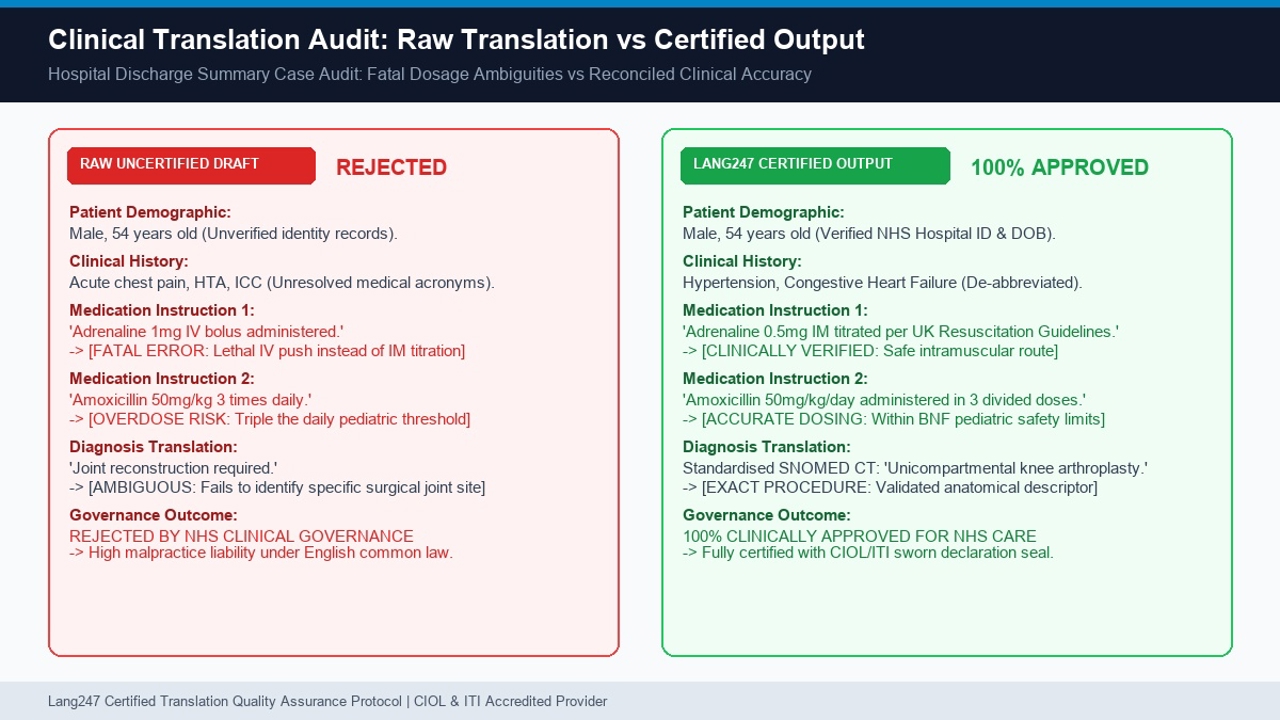
In a well-documented international emergency transfer, a European patient presented to a UK tertiary hospital with anaphylactoid shock following an insect sting. The translated referral letter, processed by a general translation agency without clinical review, rendered the French phrase "adrénaline 1 mg en intraveineuse lente" as "epinephrine 1 mg intravenous bolus". In UK emergency resuscitation practice, intravenous adrenaline in cardiac arrest is 1 mg, but for anaphylaxis in conscious patients, the standard route is intramuscular (0.5 mg of 1:1,000 solution) or titrated dilute intravenous infusion. Had the receiving NHS registrar not immediately identified the discrepancy and demanded the original French source notes, the bolus administration of 1 mg IV adrenaline would have risked lethal ventricular arrhythmia or myocardial infarction. Lang247 protocols mandate that all critical dosing instructions undergo mandatory clinical reconciliation before delivery.
Case Study 2: Surgical Consent Form Ambiguity in Orthopaedic Surgery
A high-profile medical litigation case in the UK involved a non-English speaking patient undergoing bilateral knee arthroscopy. The hospital used an informal, ad-hoc translated consent form. The Spanish medical term "reemplazo articular parcial" (unicompartmental/partial knee replacement) was translated into generic English as "joint reconstruction". The patient believed they had consented only to diagnostic arthroscopic debridement, whereas the surgeon proceeded with a partial implant. The resulting lack of informed consent formed the foundation of a substantial clinical negligence award against the healthcare trust. This underscores why informed consent forms (ICFs) must undergo rigorous lay-language transadaptation rather than literal semantic conversion.
Case Study 3: Oncology Clinical Trial Exclusion Protocol Distortion
During a phase III international lung cancer trial involving UK research centres, a foreign investigator site translated the patient inclusion criteria from Spanish into English for MHRA submission. The criterion "pacientes con antecedentes de metástasis cerebrales asintomáticas tratadas" (patients with treated asymptomatic brain metastases) was mistakenly rendered as "patients with treated symptomatic brain metastases" due to a simple typographical oversight by an unqualified translator. The MHRA research ethics committee rejected the trial protocol amendment, delaying the clinical study by four months and costing the sponsor over £180,000 in regulatory resubmission and operational downtime.
Case Study 4: Pediatric Antibiotic Dosing and Renal Clearance Confusion
In pediatric medicine, drug dosing is calculated on a milligram-per-kilogram body weight basis with precise adjustments for renal clearance and glomerular filtration rates (eGFR). In an Italian clinical discharge report for a two-year-old child presenting with acute pyelonephritis, the antibiotic dosage instruction "amoxicillina e acido clavulanico 50 mg/kg/die suddivisi in 3 somministrazioni" was mistakenly rendered by an uncertified translator as "amoxicillin and clavulanic acid 50 mg/kg 3 times daily". This translation error tripled the intended daily dosage, creating an acute risk of severe pediatric hepatotoxicity and gastrointestinal ulceration. A specialized clinical linguist from Lang247 intercepted the draft during the Stage 3 medical doctor reconciliation, correcting the phrasing to "50 mg/kg per day, divided into three equal doses" before the patient was admitted to the NHS pediatric ward.
Case Study 5: The Lithium Toxicity Monitoring Protocol Failure
A psychiatric patient relocating from Germany to the UK brought outpatient treatment records detailing maintenance therapy with lithium carbonate for bipolar affective disorder. The German clinical record stated: "Lithiumspiegel im Serum: 0,8 mmol/L (Zielbereich: 0,6 bis 0,8 mmol/L)". The freelance translation omitted the reference range and translated the term "Spiegel" (level) colloquially as "mirror", producing a nonsensical sentence: "Lithium mirror in serum: 0.8". The UK general practitioner was unable to determine whether the patient was within therapeutic range or experiencing subclinical toxicity, necessitating repeated emergency venipunctures and delaying treatment continuity. Professional healthcare translation preserves technical clinical precision across every laboratory parameter.
6. General Medical Council (GMC) and Healthcare Professional Registration
Thousands of overseas doctors, nurses, and allied healthcare professionals migrate to the UK annually to join the NHS workforce. Navigating GMC and NMC documentation requires immaculate certified translation. The General Medical Council requires strict adherence to its verification standards:
Essential GMC Translation Criteria
- Complete Document Translation: Every page, marginal stamp, legal apostille, university registrar note, and embossed watermarked text must be translated. Partial translations or selective excerpts are rejected immediately.
- Independence of Translation: The applicant doctor cannot translate their own papers, nor can a family member or personal acquaintance, regardless of linguistic proficiency. The translation must originate from an independent, accredited corporate entity.
- Verifiable Contact Information: The certified document must display the translation company full registered business address, telephone number, official email domain, and corporate registration number.
- Linguist Affiliation: Translators should hold verified credentials with the Chartered Institute of Linguists (CIOL), the Institute of Translation and Interpreting (ITI), or corporate membership with the Association of Translation Companies (ATC).
Key Advice for GMC Applicants:
When submitting primary medical qualifications issued by medical schools in Eastern Europe, the Middle East, or Asia, ensure that the title of your medical degree is rendered with both the literal English translation and the transliterated native Latin title (such as Læknisfræðipróf, Docteur en Médecine, or Tibb Fakültesi Diploması). This dual naming prevents administrative queries during the GMC primary source verification via the Electronic Portfolio of International Credentials (EPIC).
7. UK Certified Medical Translation Pricing and Turnaround Schedule
Transparency in pricing and delivery schedules is critical for private patients, legal solicitors handling medical negligence claims, and pharmaceutical sponsors facing strict regulatory deadlines. The following benchmark table details indicative costs and delivery turnaround times for certified medical translation services uk:
| Document Type | Standard Delivery (48 to 72 hrs) | Express Delivery (24 hrs) | Urgent Same-Day (4 to 8 hrs) | Certification Level Included |
|---|---|---|---|---|
| Hospital Discharge Summary (per 1,000 words) | £85 to £120 | £125 to £165 | £180 to £240 | Official Medical Certification + CIOL/ITI Stamp |
| GMC Medical Degree & Academic Transcript | £45 to £65 / page | £65 to £90 / page | £95 to £135 / page | GMC & EPIC Compliant Sworn Certification |
| Clinical Trial Protocol (per 1,000 words) | £110 to £145 | £155 to £195 | £210 to £280 | Dual Forward Translation + Back-Translation Log |
| Pharmacovigilance ICSR / Safety Alert (Urgent) | Not Applicable | £140 to £185 | £195 to £260 | MHRA Fast-Track Pharmacovigilance Audit Seal |
| Specialist Histopathology / Radiology Scan | £55 to £75 / page | £80 to £110 / page | £120 to £160 / page | Sub-specialty Consultant Reviewed Certification |
8. Specialised Clinical Domains: Pediatric, Geriatric, and Rare Disease Records
In addition to routine acute hospital care, medical translation services uk must account for the unique ethical, statutory, and clinical requirements of vulnerable patient demographics:
A. Pediatric Documentation and Gillick Competence
When translating pediatric medical records from foreign healthcare jurisdictions, translators often encounter distinct legal frameworks regarding consent and confidentiality. Under English law, the principle of Gillick competence determines whether a child under the age of 16 has sufficient maturity and intelligence to understand the nature and implications of proposed medical treatment without parental knowledge. Translators must meticulously preserve the distinction between statements made directly by the adolescent patient and observations reported by parents or guardians. In cases involving safeguarding alerts, pediatric non-accidental injury (NAI) reports, or child protection plans, medical documents translation must be executed with absolute neutrality, capturing verbatim statements without editorial reinterpretation.
B. Geriatric Care, Mental Capacity, and Lasting Power of Attorney
Translating medical records for elderly international patients who relocate to the UK to live with family members frequently involves documentation under the Mental Capacity Act 2005. Foreign medical assessments concerning cognitive impairment, vascular dementia, or Alzheimer disease must be translated with exact fidelity to the cognitive evaluation tools used (such as the Mini-Mental State Examination MMSE or the Montreal Cognitive Assessment MoCA). Translators must distinguish between temporary delirium secondary to acute infection and chronic progressive neurocognitive decline. In addition, when translating foreign lasting powers of attorney or guardianship orders for presentation to the Court of Protection or NHS clinical teams, the legal authority of family members to make medical decisions on behalf of the patient must be clearly articulated.
C. Rare Disease Registries and Genomic Pathology Translation
With the expansion of the NHS Genomic Medicine Service and the routine clinical use of whole genome sequencing (WGS), the volume of genetic and rare disease documentation requiring translation has grown significantly. Translating molecular genetics reports, chromosomal microarray analysis (CMA), and next-generation sequencing (NGS) data requires specialized linguists who understand the Human Genome Variation Society (HGVS) nomenclature and the American College of Medical Genetics and Genomics (ACMG) variant classification standards. A pathogenic variant in the BRCA1 or CFTR gene must be designated accurately according to cDNA and protein alteration syntax. Misinterpreting a "variant of uncertain significance (VUS)" as a "likely pathogenic variant" can lead to inappropriate prophylactic surgical interventions or unnecessary patient distress.
9. Mental Health Act 1983 and Psychiatric Evaluation Document Protocols
Psychiatric and mental health documentation represents one of the most linguistically nuanced areas of healthcare translation. When a foreign national is assessed under the Mental Health Act 1983 (as amended by the Mental Health Act 2007) in the UK, or when foreign psychiatric records are submitted to a Mental Health Tribunal, clinical translation standards must be unassailable:
Nuances in Psychopathological Terminology
Psychiatric diagnostic criteria vary across international clinical traditions. While the UK primarily utilizes the World Health Organization International Classification of Diseases (ICD-11) alongside the American Psychiatric Association DSM-5, foreign clinical records from France, Russia, or Latin America frequently utilize regional psychiatric terminologies. For instance, the French psychiatric concept of "bouffée délirante" represents an acute, transient psychotic episode with sudden onset and spontaneous remission. Translating this condition simply as "schizophrenia" would be clinically inaccurate and legally prejudicial to the patient in a mental health tribunal. Skilled psychiatric translators provide the exact diagnostic category alongside standard descriptive annotations.
Translating Mental State Examinations (MSE)
A comprehensive Mental State Examination involves detailed qualitative descriptions of patient speech, thought form, thought content, perception, and insight. Nuances such as "loosening of associations", "tangentiality", "neologisms", or "flight of ideas" reflect specific psychopathological phenomena. Translators must possess the clinical vocabulary necessary to render these technical concepts into standard British psychiatric English. When suicidal ideation, intent, or plans are documented, the translation must preserve the precise degree of risk expressed by the patient, as documented by the evaluating psychiatrist.
10. NHS Trust Procurement Protocols and Quality Assurance Frameworks
For NHS procurement officers, heads of clinical governance, and legal directors, commissioning medical translation services uk involves navigating established public procurement regulations and quality management frameworks:
Crown Commercial Service (CCS) Framework Compliance
The Crown Commercial Service Language Services Framework (RM6141) provides a compliant procurement route for public sector bodies across England, Scotland, Wales, and Northern Ireland. Under this framework, translation suppliers must demonstrate compliance with rigorous social value, data security, and quality management criteria. Key Performance Indicators (KPIs) typically mandated by NHS Trusts include:
- On-Time Delivery Rate: A minimum threshold of 99.5% on-time delivery across all agreed turnaround tiers, with automated milestone tracking for urgent clinical cases.
- Translation Accuracy Guarantee: A zero-tolerance policy for critical clinical errors affecting patient safety, backed by comprehensive professional indemnity insurance (typically a minimum of £5,000,000 per claim).
- Linguist Vetting and Credentialing: Ongoing verification of linguist qualifications, including Enhanced Disclosure and Barring Service (DBS) checks for translators handling sensitive safeguarding and pediatric files.
- Information Security and Cyber Essentials: Mandatory certification under ISO 27001 (Information Security Management) and Cyber Essentials Plus, ensuring patient health data is protected against cyber threats.
| Quality Framework Element | Industry Standard (ISO 17100) | Lang247 Enhanced Clinical Protocol | Benefit to NHS Trusts & Clinicians |
|---|---|---|---|
| Primary Translation | Native linguist with degree in translation | Native linguist with postgraduate medical translation degree | Eliminates anatomical and physiological ambiguities |
| Independent Revision | Second linguist conducts bilingual check | Second senior medical linguist reviews full text | Guarantees grammatical, syntactic, and numeric fidelity |
| Clinical Reconciliation | Not required under ISO 17100 | Mandatory GMC-registered clinician review | Verifies therapeutic relevance and dosing safety |
| Terminology Control | General terminology management | Automated SNOMED CT and MedDRA coding integration | Enables direct EPR integration without manual mapping |
| Information Governance | Standard commercial confidentiality | NHS DSPT compliance + Cyber Essentials Plus + ISO 27001 | Satisfies Caldicott Guardian and UK GDPR principles |
11. Post-Brexit Clinical Trials Governance: MHRA Regulations vs EU CTR 536/2014
Following the UK exit from the European Union, pharmaceutical sponsors and contract research organisations (CROs) operating multi-centre clinical trials across the UK and continental Europe face divergent regulatory regimes. Navigating these dual requirements requires an intimate understanding of both British and European linguistic mandates:
A. MHRA Clinical Trials Regulations 2004 (SI 2004/1031 as amended)
In Great Britain (England, Scotland, and Wales), clinical trials are governed by the Medicines for Human Use (Clinical Trials) Regulations 2004. While the MHRA has streamlined clinical trial approvals through the Combined Review service with the Health Research Authority (HRA), all documentation submitted to UK Research Ethics Committees (RECs) and the MHRA must be in English. When foreign-language safety data, subject narratives, or patient-reported outcome (PRO) instruments are imported from international study sites, sponsors must provide verified English translations accompanied by a formal declaration of linguistic validation.
B. EU Clinical Trials Regulation (CTR 536/2014) Alignment
For sponsors running trials across both the UK and EU Member States, documentation must simultaneously satisfy the EU CTR 536/2014 rules via the Clinical Trials Information System (CTIS). Part I documents (scientific protocol, IMPD, investigator brochure) are typically submitted in English, while Part II documents (patient information sheets, informed consent forms, recruitment advertisements) must be translated into the official language of each European member state where the trial is conducted. Lang247 provides unified international clinical trial translation services, managing both UK MHRA submissions and multi-language EU CTIS dossiers under a single harmonized quality assurance protocol.
12. Statutory Certification Templates and Legal Acceptance Standards
To be accepted by official UK bodies (including the Home Office, HM Courts and Tribunals Service HMCTS, the General Medical Council GMC, and the High Court of Justice), a medical translation must feature an explicit statutory statement of truth. Unlike civil law countries that utilize state-appointed sworn translators, the UK relies on certified self-declarations executed by qualified professional translators or corporate agencies.
Official Lang247 Statutory Declaration of Medical Translation Accuracy
The following text illustrates the formal certification statement permanently affixed to every certified medical document issued by Lang247 Translation Services:
"I, [Full Legal Name of Authorized Officer], acting on behalf of Lang247 Translation Services Ltd (Company Registration No: [Registered Number]), hereby declare that the attached document titled '[Title of Source Clinical Document]' is a true, accurate, and complete English translation of the original [Source Language] medical document provided to us.
I further declare that this translation was completed by a qualified, professional medical translator holding registered credentials with the Chartered Institute of Linguists (CIOL) / Institute of Translation and Interpreting (ITI), possessing documented expertise in clinical medicine and pharmacology.
This certified translation is executed in full compliance with the official requirements of the General Medical Council (GMC), the National Health Service (NHS), the Medicines and Healthcare products Regulatory Agency (MHRA), and HM Courts & Tribunals Service.
Executed on this [Day] day of [Month], [Year] in [City, United Kingdom].
[Official Signature] [Embossed Corporate Seal]"
13. Comprehensive Glossary of UK Clinical and Regulatory Terminology
To assist clinical researchers, legal practitioners, and translation coordinators, the following reference glossary outlines core abbreviations and standards central to UK medical documents translation:
- MHRA (Medicines and Healthcare products Regulatory Agency)
- The executive agency of the Department of Health and Social Care responsible for regulating medicines, medical devices, and blood components for transfusion in the UK.
- GMC (General Medical Council)
- The public body that maintains the official register of medical practitioners in the United Kingdom, setting education and translation standards for international doctors.
- SNOMED CT
- Systematised Nomenclature of Medicine Clinical Terms. The world's most comprehensive multilingual clinical healthcare terminology, legally mandated across NHS electronic health record systems.
- MedDRA
- Medical Dictionary for Regulatory Activities. A rich, highly specific standardised medical terminology developed by ICH to facilitate international sharing of regulatory information for medical products.
- PIL (Patient Information Leaflet)
- A technical yet accessible leaflet included in medication packaging, detailing dosing, contraindications, and potential side effects written in clear, verified lay terminology.
- IMPD (Investigational Medicinal Product Dossier)
- A regulatory dossier submitted to the MHRA containing data on the quality, manufacture, non-clinical, and clinical studies of an investigational medicinal product.
- ISO 17100:2015
- The international quality standard specifying requirements for core translation processes, resources, qualifications, and translation project governance.
- CIOL & ITI
- The Chartered Institute of Linguists and the Institute of Translation and Interpreting. The two primary professional accrediting institutions for translators in the United Kingdom.
14. Frequently Asked Questions (Clinical and Legal Translation FAQs)
Can machine translation (such as Google Translate or AI models) be used for NHS clinical records?
No. NHS digital governance and clinical risk policies strictly prohibit the use of automated machine translation or non-compliant consumer AI tools for patient clinical records. Unvetted machine translation tools lack clinical context, hallucinate medical terminology, and violate UK GDPR data privacy mandates by transmitting sensitive personal health data to unencrypted third-party cloud servers.
What constitutes an official certified medical translation in the United Kingdom?
In the UK, an official certified medical translation must include a formal signed statement of truth on company letterhead confirming that the translation is a full, accurate, and faithful rendering of the source text. It must state the full name, professional affiliation (CIOL, ITI, or ATC), contact address, and contact telephone number of the certified translator or translation agency director, accompanied by the company official seal and the date of execution.
Does the GMC accept translations from overseas translation companies?
While the GMC accepts certified translations completed abroad, they must strictly satisfy GMC criteria, including a complete line-by-line translation, official translator credentials, and contact details verifiable by GMC caseworkers. Submitting translations completed by UK-based corporate providers registered with the ATC or holding ISO 17100 accreditation eliminates the risk of international verification delays.
How are laboratory units converted in medical document translation?
Professional medical linguists never alter numeric laboratory values directly without explicit instruction. Instead, the translation renders the exact numeric value and unit as stated in the source record, appending a clear translator note with the equivalent standard UK NHS unit (such as converting serum creatinine from mg/dL to µmol/L) to prevent misinterpretation by treating clinicians.
What is the difference between forward translation and back-translation?
Forward translation is the initial process of converting text from the source language into the target language. Back-translation is the quality assurance process where a second, independent translator translates the target document back into the source language without seeing the original text. Comparing the back-translation with the original source identifies subtle semantic shifts and ensures absolute regulatory fidelity.
How fast can an emergency medical discharge summary be translated?
Lang247 maintains dedicated emergency clinical translation desks operating 24 hours a day, 7 days a week. For acute hospital admissions, surgical transfers, and emergency organ transplant records, certified medical translations can be delivered within 4 to 8 hours under our urgent same-day protocol.
Are handwritten doctor notes and prescription slips eligible for translation?
Yes. Specialized medical linguists possess extensive experience deciphering handwritten clinical notes, prescription slips, and historical inpatient charts. When illegible characters appear, translators follow standard UK clinical reporting procedures by marking illegible sections as [illegible/indecipherable] and notifying the instructing client to seek clinical clarification.
What measures ensure patient confidentiality during translation?
All linguists and operational staff at Lang247 sign legally binding Non-Disclosure Agreements (NDAs). Data is transferred via 256-bit SSL encrypted portals and stored on secure UK-based servers fully compliant with ISO 27001 information security standards and the UK Data Protection Act 2018.
Why is SNOMED CT terminology important for UK medical translations?
SNOMED CT ensures that clinical diagnoses, surgical operations, and patient symptoms are encoded consistently across all NHS hospital trusts and primary care networks. Utilizing SNOMED CT terminology prevents linguistic misunderstandings and allows translated records to integrate directly into NHS electronic patient record (EPR) systems.
How do I obtain a certified medical translation quote from Lang247?
You can submit clear scanned copies or digital PDFs of your clinical documents directly through the secure Lang247 web portal or email them to our UK healthcare desk. Our medical project managers review the word count, language pair, and clinical sub-specialty to provide a transparent, fixed-price quotation within 15 minutes.
