

Medical Device Translation Services: UKCA Marking, MDR & IFU Regulatory Compliance Guide 2026
1. Executive Summary: The Critical Role of Linguistic Precision in Medical Technology
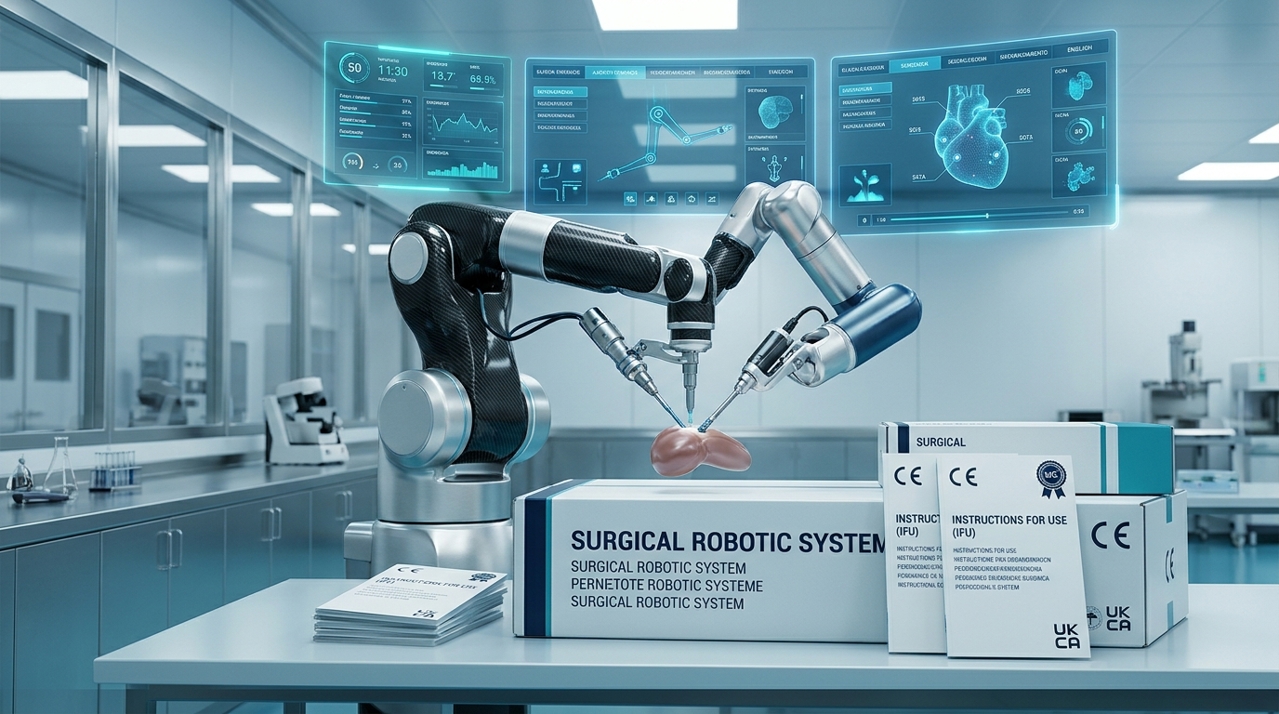
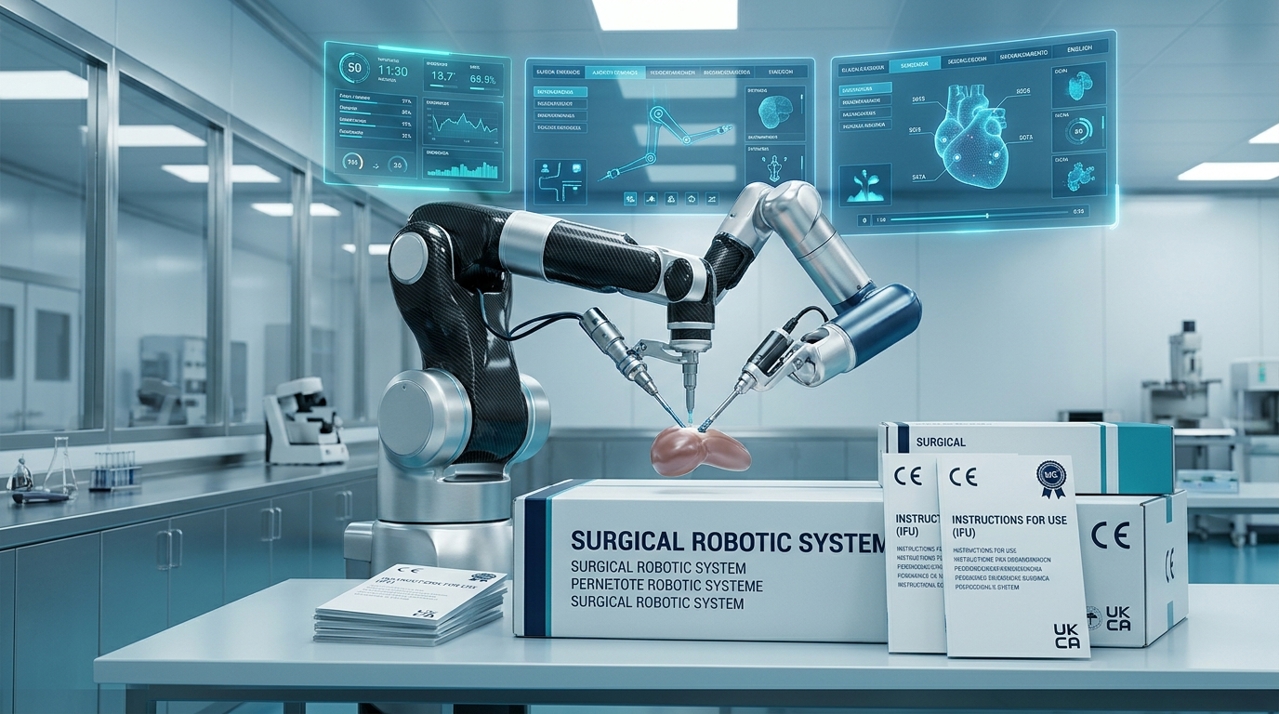
The global medical device sector operates under the most stringent technical regulations in modern engineering. From implantable cardiac defibrillators and robotic surgical systems to in-vitro diagnostic (IVD) lateral flow assays and digital therapeutic software applications, medical technology saves lives only when operated with absolute precision. Within this high-stakes landscape, medical device translation services represent a foundational regulatory safeguard rather than an administrative afterthought. A minor ambiguity in an operating instruction, a mistranslated torque specification on a bone screw, or an incomplete contraindication warning in a patient handbook can trigger catastrophic clinical consequences, immediate product recalls, and severe criminal liability for manufacturers.
Following the withdrawal of the United Kingdom from the European Union, the regulatory framework governing medical technology in Great Britain (England, Scotland, and Wales) has undergone substantial structural evolution. Medical device manufacturers, authorised representatives, and international distributors must simultaneously navigate the domestic UK Medical Devices Regulations 2002 (SI 2002/618 as amended) administered by the Medicines and Healthcare products Regulatory Agency (MHRA) and the European Union Medical Device Regulation (EU MDR 2017/745) alongside the In Vitro Diagnostic Medical Devices Regulation (EU IVDR 2017/746). In every market, commercial access is contingent upon providing exhaustive, culturally adapted, and legally verified technical documentation in the official national languages of each target territory.
The operational mandate of professional medical device translation extends far beyond basic text conversion. It requires deep integration between biomedical engineering, clinical terminology databases, human factors engineering, and quality management systems operating under ISO 13485:2016 and ISO 17100:2015. This comprehensive regulatory and technical guide examines the statutory requirements, linguistic standards, and audit frameworks governing medical device translation in the UK and European markets in 2026.
2. The Regulatory Framework: UKCA Marking vs EU MDR Linguistic Requirements
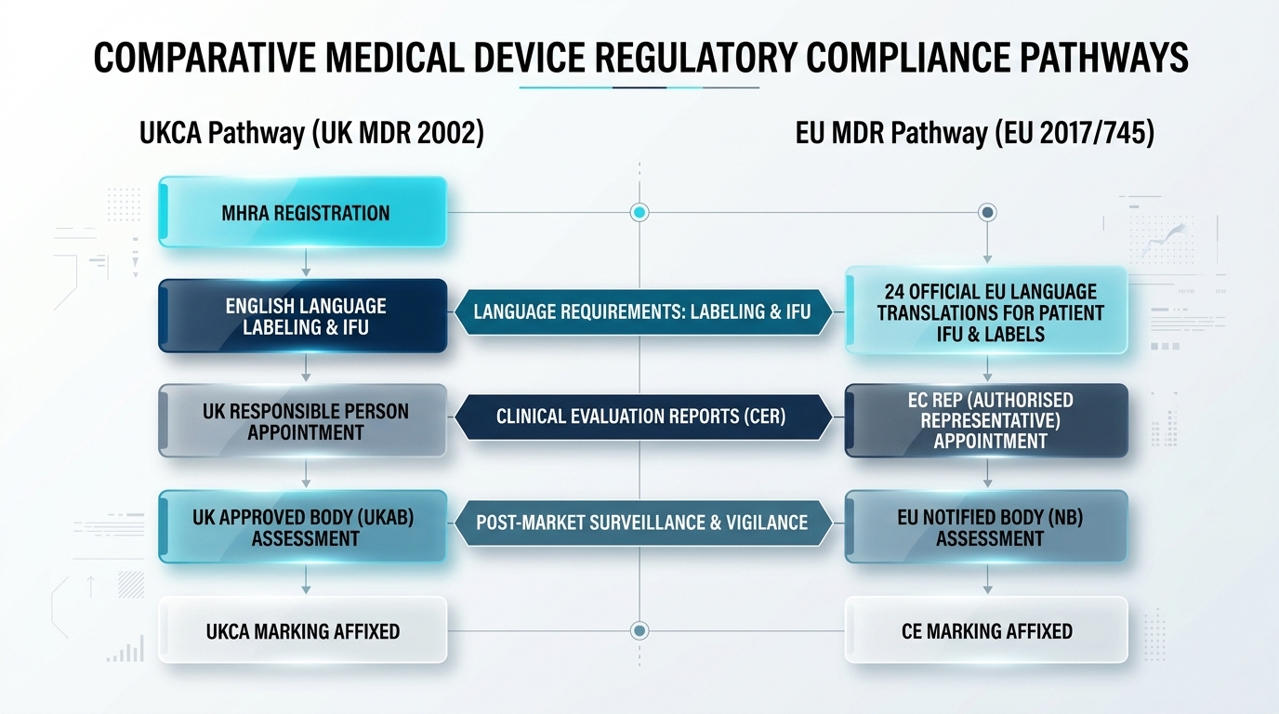
The dual regulatory environment in the UK and Europe requires manufacturers to maintain parallel compliance strategies. Linguistic requirements represent a core component of conformity assessment procedures conducted by UK Approved Bodies and EU Notified Bodies:
A. Great Britain: UKCA Marking and MHRA Regulations
In Great Britain, medical devices placed on the market must achieve compliance with the UK Medical Devices Regulations 2002 (as amended). Key compliance milestones and language requirements enforced by the MHRA include:
- Official Language Requirement: All labels, packaging text, and Instructions for Use (IFU) supplied with medical devices distributed in Great Britain must be provided in English. For devices intended for lay users or home healthcare, the language must be clear, accessible, and free of unnecessary technical jargon.
- Transition Timelines: CE marked medical devices continue to be recognised in Great Britain during the statutory transitional windows established by the UK government (extending to 2028 or 2030 depending on device classification and legislation). However, manufacturers transitioning to the UKCA mark must update their technical files, user manuals, and Declarations of Conformity to reference UK statutory instruments.
- UK Responsible Person (UKRP): Non-UK manufacturers must appoint a UK Responsible Person registered with the MHRA. The contact details of the UKRP must appear on the device labeling, outer packaging, or accompanying IFU leaflet in clear English.
B. Northern Ireland: Special Dual Status under the Windsor Framework
Under the terms of the Windsor Framework and the Northern Ireland Protocol, the European Union Medical Device Regulation (EU MDR 2017/745) and EU IVDR 2017/746 apply directly in Northern Ireland. Consequently, medical devices distributed in Northern Ireland must bear the CE mark (or UKNI mark where a UK Approved Body is utilized) and adhere strictly to EU language rules. If a device is sold across both Great Britain and Northern Ireland, packaging must accommodate both UKRP and EU Authorised Representative (EC REP) designations alongside harmonized multilingual labeling.
C. The European Union: EU MDR 2017/745 Multilingual Mandates
For UK manufacturers exporting medical technology into the European Union, the EU MDR enforces strict language requirements under Article 10(11) and Article 41. Unlike the centralised pharmaceutical approvals overseen by the EMA, medical device language requirements are determined individually by each EU Member State:
| Target European Market | Professional Use Device IFU Language | Lay User / Home Healthcare Device IFU Language | Software GUI Interface Mandate |
|---|---|---|---|
| Germany & Austria | German (National law: MPDG) | German only (Strict lay accessibility) | German (English permissible only for specialist clinical tools with user consent) |
| France & Belgium (Wallonia) | French (Loi Toubon requirements) | French only (Mandatory) | French mandatory for all user-facing prompts and alarms |
| Italy | Italian | Italian only | Italian required for primary clinical interface |
| Spain | Spanish (Castilian) | Spanish only | Spanish mandatory for safety alerts and user prompts |
| Netherlands & Belgium (Flanders) | Dutch or English (Professional hospital context) | Dutch (Mandatory for patient use) | English acceptable for specialist hospital devices |
| Nordic Region (Sweden, Denmark, Norway, Finland) | National languages (Swedish, Danish, Norwegian, Finnish) | National languages mandatory | English often permitted for professional surgical suites |
3. Risk Classification and Notified Body Translation Scrutiny
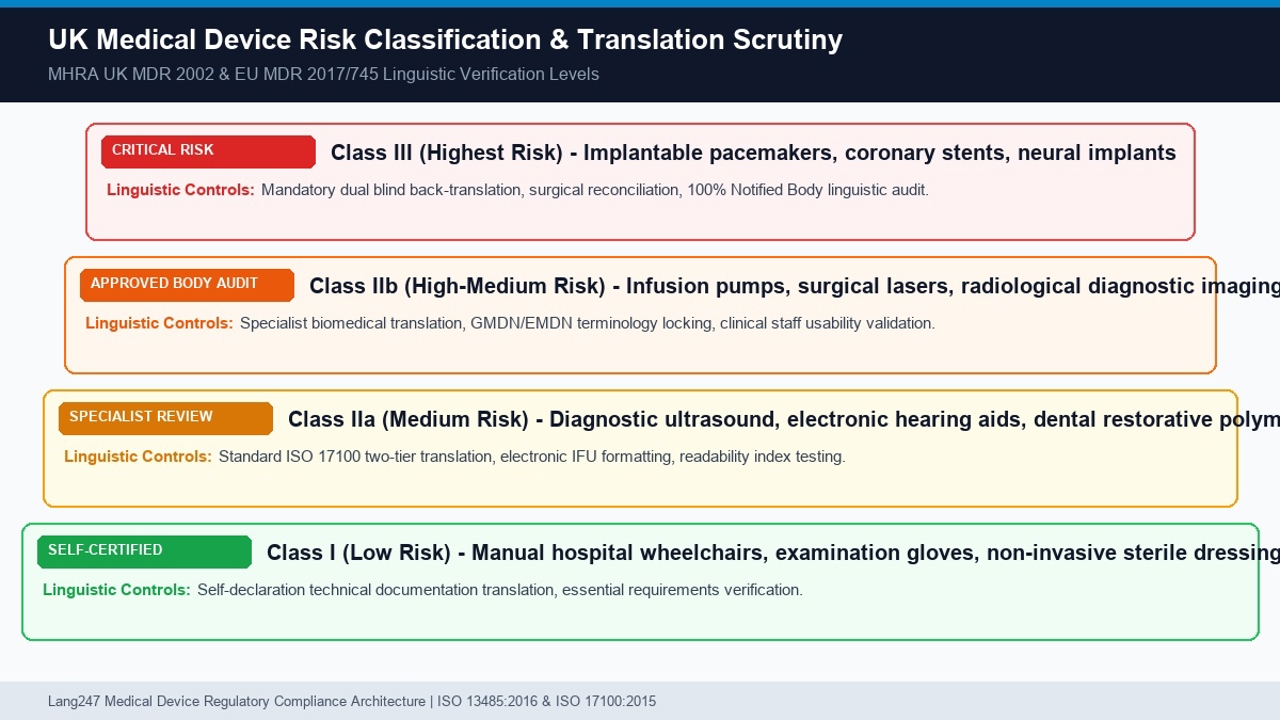
Under both UK MDR 2002 and EU MDR 2017/745, medical devices are categorized into distinct risk classes based on their intended purpose, invasiveness, duration of body contact, and biological activity. The intensity of regulatory and linguistic scrutiny applied by UK Approved Bodies (such as BSI, DEKRA, and SGS UK) increases progressively across these tiers:
Class I: Low Risk Devices
Class I devices (such as manual hospital beds, non-sterile bandages, stethoscopes, and mechanical wheelchairs) are typically self-certified by the manufacturer, unless they possess a measuring function (Class Im) or are supplied sterile (Class Is). For Class I products, manufacturers compile a Technical File confirming compliance with General Safety and Performance Requirements (GSPRs). Instructions for Use must be provided in English for the UK market and in the national languages of target EU export markets. Linguistic quality control focuses on clarity of assembly, cleaning instructions, and routine maintenance protocols.
Class IIa: Medium-Low Risk Devices
Class IIa devices (including diagnostic ultrasound scanners, dental filling materials, short-term contact lenses, and hearing aids) require a conformity assessment conducted by an Approved Body. Technical documentation audits examine whether translated user manuals accurately reflect the device technical specifications and clinical risk assessments conducted under ISO 14971. In addition, electronic Instructions for Use (e-IFU) provided on manufacturer portals must satisfy Commission Regulation (EU) No 207/2012 regarding website security, language navigation, and downloadable PDF accessibility.
Class IIb: Medium-High Risk Devices
Class IIb devices (such as surgical lasers, infusion pumps, radiological imaging machines, and complex ventilator circuits) present significant clinical hazards if operated incorrectly. For these devices, Approved Bodies review the complete technical file, including clinical evaluation reports, software verification data, and multilingual labeling bundles. Translators must possess specialized training in biomedical engineering and clinical physiology. Any ambiguity in error codes, acoustic alarm volume settings, or drug concentration calculations can result in non-conformities during regulatory audits.
Class III: Highest Risk Devices
Class III devices (including drug-eluting coronary stents, prosthetic heart valves, deep brain stimulators, and spinal implants) undergo the most exhaustive regulatory assessment. For Class III technologies, the Summary of Safety and Clinical Performance (SSCP) required under EU MDR Article 32 must be translated into all official languages of the European countries where the device is marketed. The SSCP must contain two distinct sections: one written for healthcare professionals using rigorous technical terminology, and a second section written in plain, accessible language for patients. Both sections must be validated through readability testing and cognitive debriefing panels.
4. Technical Documentation Typologies in Medical Device Translation
Comprehensive medical device translation services cover an extensive array of engineering, legal, clinical, and user-facing literature. Each document type serves a specific regulatory function and requires tailored linguistic methodologies:
A. Instructions for Use (IFU) and User Manuals
The IFU is the primary user-facing safety document accompanying a medical device. Under GSPR 23 of the EU MDR and Schedule 3 of the UK MDR 2002, the IFU must detail the device intended purpose, target patient population, clinical contraindications, residual risks, sterilization protocols, troubleshooting steps, and technical specifications. In professional ifu translation services uk, linguists must maintain strict consistency across imperative verbs, warning notices (Danger, Warning, Caution), and clinical procedures.
B. Primary Packaging, Blister Packs, and Sterile Barrier Labels
Device packaging labels are severely constrained by physical surface area, especially on miniature sterile pouches, ampoules, and catheter packaging. Translators must collaborate closely with packaging engineers to ensure translated text fits within precise dimensional tolerances without truncating critical safety text. Label translation relies extensively on standardized international medical symbols governed by ISO 15223-1 (Medical devices: Symbols to be used with information to be supplied by the manufacturer). Translators ensure that symbolic representations align seamlessly with required multilingual explanatory text.
C. Software Graphical User Interfaces (GUI) and Mobile Medical Apps
Modern medical devices frequently feature embedded software or companion smartphone applications classified as Software as a Medical Device (SaMD) under IEC 62304. Localizing a medical software GUI requires specialized technical handling: character limits on digital LCD screens, string externalization in XML or JSON resource files, dynamic font rendering, and immediate visual clarity for critical clinical alarms. A truncated alarm prompt such as "LOW BATT..." instead of "LOW BATTERY SHUTDOWN IMMINENT" can have disastrous implications in an intensive care unit.
D. Clinical Evaluation Reports (CER) and Investigator Brochures
Manufacturers must demonstrate clinical safety through robust clinical evaluation reports compiled by qualified clinical researchers. When international clinical studies conducted in Japan, Germany, China, or South America are incorporated into a UKCA or CE technical file, the underlying clinical reports, adverse event logs, and statistical analysis plans must be translated into English with rigorous scientific accuracy. Translators must master biostatistics, epidemiology, and clinical trial nomenclature.
E. Post-Market Surveillance (PMS) and Field Safety Corrective Actions (FSCA)
Regulatory compliance does not terminate upon commercial release. Manufacturers must maintain continuous post-market surveillance systems under ISO 13485:2016. When safety signals or device malfunctions occur, manufacturers must issue urgent Field Safety Notices (FSNs) to hospital clinical engineering departments and national regulatory authorities. In emergency safety recalls, FSNs must be translated, certified, and dispatched across multiple global jurisdictions within 24 to 48 hours to mitigate acute patient hazards.
5. Quality Management Architecture: ISO 13485 and ISO 17100 Standards
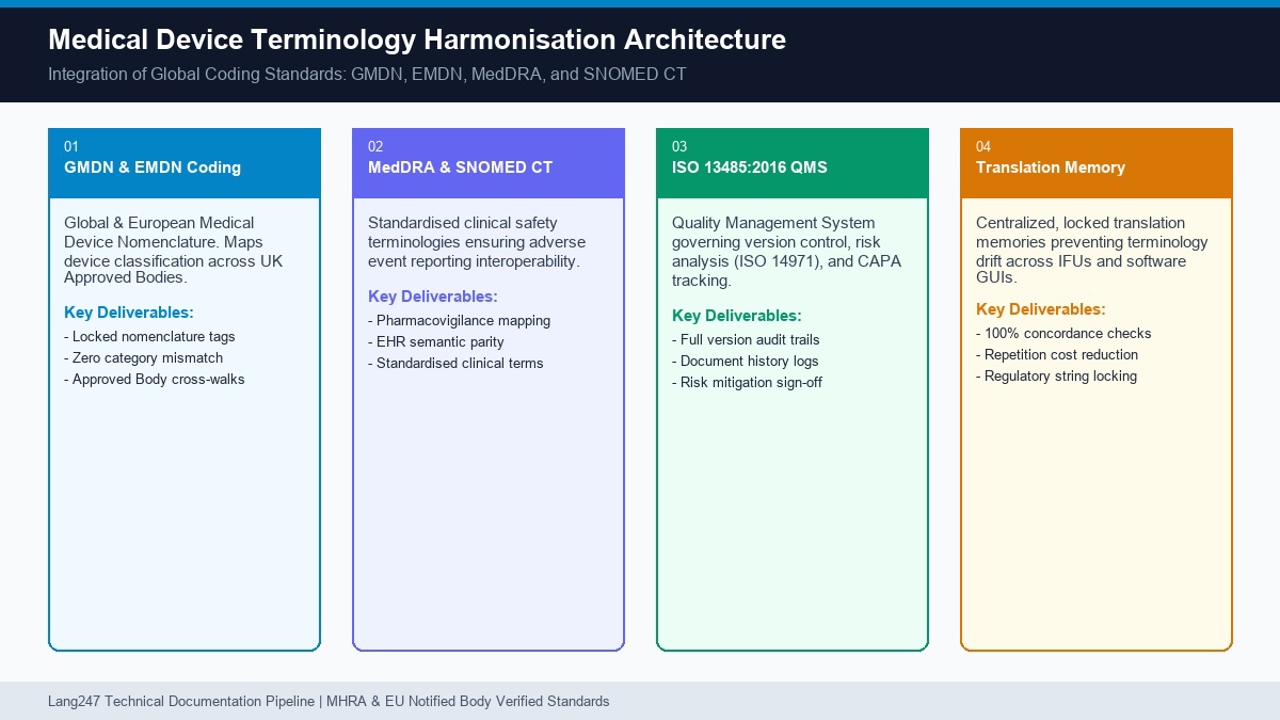
High-reliability medical device translation relies upon institutional quality management systems designed to eliminate linguistic defects before technical documentation reaches Approved Bodies or hospital operating theatres. Professional localization partners must operate under two complementary international standards:
ISO 13485:2016: Quality Management for Medical Devices
While ISO 13485 is primarily designed for medical device manufacturers, leading translation providers maintain audited compliance with its core quality principles. Key operational elements include:
- Document and Version Control: Strict change-management procedures ensuring that every translated document reflects the exact engineering revision of the source device. Obsolete translations are archived immediately to prevent distribution of deprecated IFUs.
- Risk Management Integration (ISO 14971): Applying clinical risk assessment principles to linguistic processes. High-risk sections (contraindications, dosage tables, pediatric warnings) are designated as critical safety points requiring enhanced clinical review.
- Corrective and Preventive Action (CAPA): Formal procedural mechanisms for logging, investigating, and resolving translation errors, terminology deviations, or client audit queries.
- Full Supply Chain Traceability: Complete audit trails identifying every translator, clinical reviser, terminologist, and quality manager involved in the lifecycle of every localized technical asset.
ISO 17100:2015: Translation Services Requirements
ISO 17100 governs translation service execution, requiring mandatory dual-linguist processing: native translation followed by an independent bilingual revision conducted by a second qualified linguist. In technical medical device contexts, Lang247 supplements this baseline with mandatory terminology harmonization and desktop publishing (DTP) quality verification.
The 5-Step Medical Device Localization Lifecycle
- Terminology Extraction and Glossary Locking: Prior to translating complex technical manuals, terminologists extract core device terminology, proprietary hardware names, and regulatory descriptors. Terms are mapped to international classifications (GMDN, EMDN, SNOMED CT) and approved by the manufacturer regulatory engineering team.
- Specialist Technical Translation: The source text is translated by biomedical linguists holding qualifications in medical engineering, physical sciences, or translation. Translators utilize locked Translation Memories (TMs) to preserve exact phrasing across product lines.
- Independent Technical Revision: A second senior biomedical linguist conducts a line-by-line comparative review, checking grammatical precision, numeric accuracy, unit conversions, and symbol consistency.
- Desktop Publishing (DTP) and Artwork Formatting: InDesign and Illustrator artwork files are formatted to ensure that translated text accommodates linguistic expansion (for instance, German text typically expands by 25% to 35% compared to English) without obscuring diagrams or truncating warnings.
- Final Linguistic Quality Assurance (LQA) and Statutory Certification: A certified quality assurance director conducts a final pre-flight inspection, generating a formal Certificate of Translation Conformity referencing UKCA and CE regulatory compliance.
6. Terminology Standardisation: GMDN, EMDN, MedDRA, and SNOMED CT
A central failure mode in medical technology localization is terminological divergence. When different product manuals or regulatory dossiers use inconsistent terms for the same medical device or anatomical structure, Approved Bodies frequently issue audit non-conformities. Leading medical device translation services systematically integrate four international classification systems:
| Classification Nomenclature | Governance Body | Core Purpose & Regulatory Function | Translation Integration Strategy |
|---|---|---|---|
| GMDN (Global Medical Device Nomenclature) | GMDN Agency | Standardised naming system used by the MHRA, FDA, and global regulatory bodies to identify medical devices uniquely. | Terms are mapped to 5-digit GMDN codes to ensure identical registration titles across international databases. |
| EMDN (European Medical Device Nomenclature) | European Commission (MDCG) | Mandatory device nomenclature under EU MDR and IVDR, integrated directly into the EUDAMED database. | Translations of device descriptions are cross-checked against official EMDN multilingual term hierarchies. |
| MedDRA (Medical Dictionary for Regulatory Activities) | ICH (International Council for Harmonisation) | Standardised terminology for clinical safety reporting, adverse events, and device-related complications. | All vigilance reports and safety alert translations map adverse reactions to MedDRA Preferred Terms (PT). |
| SNOMED CT | SNOMED International | Comprehensive clinical health terminology legally mandated across NHS electronic patient records in the UK. | Device-generated diagnostic readings and clinical documentation are coded to ensure NHS EPR interoperability. |
7. Medical Device Translation Pricing and Turnaround Benchmarks (UK Market)
Budgeting for regulatory translation requires transparent per-word rates, DTP formatting costs, and rush turnaround schedules. The following benchmark table details standard commercial pricing for certified medical device translation services in the United Kingdom:
| Documentation Type | Standard Turnaround (5 to 7 Days) | Express Turnaround (48 to 72 Hours) | Urgent Field Safety Recall (24 Hours) | Included Quality Assurance Deliverables |
|---|---|---|---|---|
| Instructions for Use (IFU) Manuals (per 1,000 words) | £115 to £155 | £165 to £210 | £230 to £295 | Dual ISO 17100 translation + InDesign DTP formatting + Certificate |
| Packaging Labels & Blister Foil Art (per label) | £45 to £65 | £70 to £95 | £110 to £145 | ISO 15223-1 symbol alignment + 1:1 artwork verification |
| Clinical Evaluation Report (CER) (per 1,000 words) | £130 to £175 | £180 to £235 | £250 to £320 | Biomedical specialist translation + Biostatistical data audit |
| Software GUI Localization (per 1,000 strings) | £140 to £190 | £195 to £260 | £270 to £360 | String validation + Character truncation check + In-context testing |
| Urgent Field Safety Notice (FSN) (Complete Bundle) | Not Applicable | £450 to £650 | £750 to £1,200 | 24-hour certified multi-jurisdiction emergency delivery |
8. Regulatory Case Studies: Translation Failures and Recalls in Medical Devices
The imperative for certified biomedical translation is demonstrated by historical regulatory recalls documented in the MHRA and FDA medical device safety databases:
Case Study 1: The Knee Prosthesis Cementing Protocol Error
In a prominent European medical device liability dispute, a manufacturer of uncemented total knee replacement implants translated the surgical technique brochure from English into German. The English source text stated: "The femoral component is available in both cemented and uncemented variations. For this model, ensure cementless press-fit fixation." In the German translation, the translator inadvertently omitted the word "cementless", translating the phrase as "für dieses Modell zementierte Fixierung sicherstellen" (ensure cemented fixation for this model). Relying on the translated surgical guide, orthopaedic surgeons in Berlin implanted uncemented prostheses using bone cement. The chemical interaction compromised the porous hydroxyapatite coating, causing early aseptic loosening in over 40 patients who required revision surgery. The manufacturer faced millions of Euros in compensation claims and an immediate product suspension across Europe. Rigorous back-translation and clinical reconciliation prevent such catastrophic omissions.
Case Study 2: Truncated Warning Prompts in Dialysis Machine Software
An international dialysis machine manufacturer updated its touchscreen software interface across European renal centres. During French localization, the warning prompt "Ultrafiltration rate exceeds safe physiological limit - confirm override" was translated as "Taux UF dépasse la limite - confirmer". Due to hardcoded pixel dimensions on the touchscreen, the word "confirmer" was cut off after the first three letters, appearing as "con...". Clinical dialysis nurses assumed the prompt was an informational notice rather than an override confirmation, leading to severe patient hypovolemia. The incident triggered an urgent MHRA Medical Device Alert (MDA) and mandated a mandatory software recall across all NHS renal units.
Case Study 3: In Vitro Diagnostic (IVD) Test Strip Incubation Ambiguity
During the introduction of a rapid point-of-care cardiac troponin assay, the packaging leaflet translated the incubation instruction from Italian into English. The Italian phrase "leggere il risultato tra 10 e 15 minuti; non leggere dopo 20 minuti" was translated as "read result after 10 to 15 minutes; do not read before 20 minutes". The inverted temporal preposition resulted in emergency department staff reading assay results after 20 minutes, when false-positive non-specific binding bands had formed. Multiple patients presenting with non-cardiac chest pain were misdiagnosed with acute myocardial infarction, prompting an emergency Field Safety Notice and redesign of the labeling workflow.
9. In Vitro Diagnostic Regulation (IVDR 2017/746): Specialized Reagent and Instrument Requirements
In vitro diagnostic medical devices (IVDs) represent a distinct and highly regulated technological category under both the UK Medical Devices Regulations 2002 and the European IVDR 2017/746. From molecular PCR thermal cyclers and next-generation sequencing assays to point-of-care blood glucose monitors and rapid antigen lateral flow devices, translating IVD technical literature demands exhaustive biochemical comprehension:
A. Reagent Package Inserts and Calibrator Certificates
IVD reagent inserts contain critical analytical specifications: analytical sensitivity, limit of detection (LoD), cross-reactivity profiles, interfering substances, and open-vial stability periods. A subtle error in translating storage temperatures (such as confusing ambient room temperature 15°C to 25°C with refrigerated storage 2°C to 8°C) or misinterpreting reconstitution instructions for lyophilized calibrators can lead to total assay degradation. In hospital pathology laboratories across the NHS, reagent insert instructions are followed verbatim by biomedical scientists. Translators must verify that all chemical concentrations (molarities, enzymatic activity units, buffer ionic strengths) are preserved with zero numeric divergence.
B. Self-Testing and Near-Patient Testing Documentation
Under IVDR Article 10, devices intended for self-testing by lay individuals (such as home fertility monitors, fecal occult blood tests, or diabetes glucose meters) are subject to intense linguistic review. The Instructions for Use must be written in simple, clear, and unambiguous language that does not require medical background knowledge. Every diagnostic step must be reinforced with visual pictorial illustrations. Technical linguistic validation for self-testing devices requires formal lay comprehension debriefing panels to confirm that non-expert users can correctly interpret positive, negative, and invalid test results without clinical supervision.
C. Performance Evaluation Reports (PER)
Similar to Clinical Evaluation Reports for general medical devices, IVDs require extensive Performance Evaluation Reports under IVDR Annex XIII. When clinical performance studies conducted across international academic medical centres are submitted to UK Approved Bodies, the statistical data (including clinical sensitivity, clinical specificity, positive predictive value PPV, and negative predictive value NPV) must be translated into English with total mathematical and regulatory fidelity.
10. Usability Engineering and Human Factors: IEC 62366-1 Compliance
Under modern regulatory standards, medical device safety is inseparable from user interface design. Both the MHRA and EU Notified Bodies require manufacturers to apply human factors engineering throughout the device design lifecycle in accordance with IEC 62366-1:2015 (Medical devices: Application of usability engineering to medical devices). The translation of user documentation directly impacts usability compliance:
Formative and Summative Usability Testing of Translated IFUs
When an English medical device user manual is translated into French, German, Spanish, or Italian, linguistic differences can alter cognitive processing speeds and task execution sequences. For Class IIb and Class III devices, human factors protocols require formative usability testing where native-speaking clinical users in target export markets execute simulated surgical or diagnostic tasks using only the translated IFU. Any usability failure (such as a surgeon hesitating during device priming or misinterpreting an emergency stop sequence) must be analyzed for linguistic root causes.
Minimizing Use Errors Through Plain Language Standards
Linguistic clarity directly mitigates use error risks. Translators follow established international plain language guidelines, including the European Commission Guidelines on the Readability of the Labelling and Package Leaflet of Medicinal Products. Core usability principles applied during translation include:
- Active Voice and Direct Imperative Syntax: Instructions use direct action verbs (e.g., "Insert the catheter until the indicator clicks" rather than "The catheter should be inserted until a click is observed").
- Hierarchical Warning Taxonomy: Strict distinction between DANGER (immediate hazard resulting in death or serious injury), WARNING (potential hazard resulting in serious injury), and CAUTION (potential hazard resulting in minor injury or equipment damage).
- Chunked Procedural Steps: Breaking multi-stage calibration or sterilization sequences into numbered, sequential steps with accompanying visual cues to prevent skipped operations.
- Readability Scoring: Applying automated and manual readability indices (such as Flesch Reading Ease and SMOG index) to verify that lay-patient materials do not exceed an 8th-grade reading level.
11. Unique Device Identification (UDI) and Barcoding Nomenclature
The global tracking of medical devices relies upon the Unique Device Identification (UDI) system established by the International Medical Device Regulators Forum (IMDRF) and incorporated into UK and European statutes. UDI compliance introduces specific linguistic and data-handling requirements across packaging artwork:
Basic UDI-DI and Product Catalog Synchronization
The Basic UDI-DI is the primary identifier of a device model and serves as the key access key in regulatory databases such as the European EUDAMED and the UK MHRA Device Registration Portal. When compiling multilingual packaging artwork, the Device Identifier (UDI-DI) and Production Identifier (UDI-PI) must remain unaltered across all language variations. Translators and artwork layout artists must ensure that dynamic barcoding blocks (GS1 DataMatrix, GS1-128, or HIBC formats) maintain mandatory quiet zones and scanning contrast without text interference from translated descriptions.
EUDAMED Multilingual Data Harmonization
For UK manufacturers distributing devices into the EU, registering products on EUDAMED involves populating standardized data fields across multiple languages. Technical descriptions, clinical indications, and device attributes must match the approved terms in the European Medical Device Nomenclature (EMDN). Lang247 provides automated UDI database localization services, ensuring that master product registries in English synchronize seamlessly with multi-country regulatory data submissions.
12. Cybersecurity, Connected Medical Devices, and SaMD Localization
With the proliferation of cloud-connected hospital monitors, wearable biosensors, and AI-driven diagnostic software (Software as a Medical Device - SaMD), cybersecurity has emerged as a critical regulatory priority for the MHRA and EU authorities. Under MDCG 2019-16 (Guidance on Cybersecurity for medical devices), technical documentation must address digital vulnerabilities:
Translating Cybersecurity Advisories and SBOM Documentation
When a manufacturer identifies a digital vulnerability in an embedded operating system or communication protocol, they must publish timely cybersecurity advisories and Software Bill of Materials (SBOM) disclosures. These technical notices must be translated into the national languages of affected health authorities and hospital clinical engineering teams. Terminology must align precisely with global cybersecurity standards, including Common Vulnerabilities and Exposures (CVE) nomenclature and the Common Vulnerability Scoring System (CVSS v3.1).
Clinical Decision Support (CDS) Software Interface Validation
AI algorithms providing automated clinical decision support (such as flagging acute intracranial hemorrhages on CT scans or predicting sepsis risk in ICU patients) must present clinical recommendations in clear, unambiguous local language. Translators must ensure that probability scores, confidence intervals, and clinical warning flags are communicated without misleading the treating physician. Software localization verification includes in-context testing on physical hardware to confirm that dynamic clinical text wraps properly across all screen resolutions.
MHRA Post-Market Vigilance Incident Reporting Timelines
Under the UK Medical Devices Regulations 2002, manufacturers are legally obligated to report adverse incidents to the MHRA within strict statutory windows. An incident that led to, or had the potential to lead to, death or serious deterioration in state of health must be reported without delay and no later than 10 calendar days following awareness. For general non-serious adverse events, the reporting window is 30 calendar days. When foreign patient complaints or hospital engineering incident logs from international markets are incorporated into UK regulatory safety files, medical device translation services must operate under emergency express turnarounds. Every clinical narrative must preserve the chronological sequence of events, serial numbers, firmware revisions, and user actions without distortion.
13. Technical Documentation Audit Checklist for UK Approved Bodies
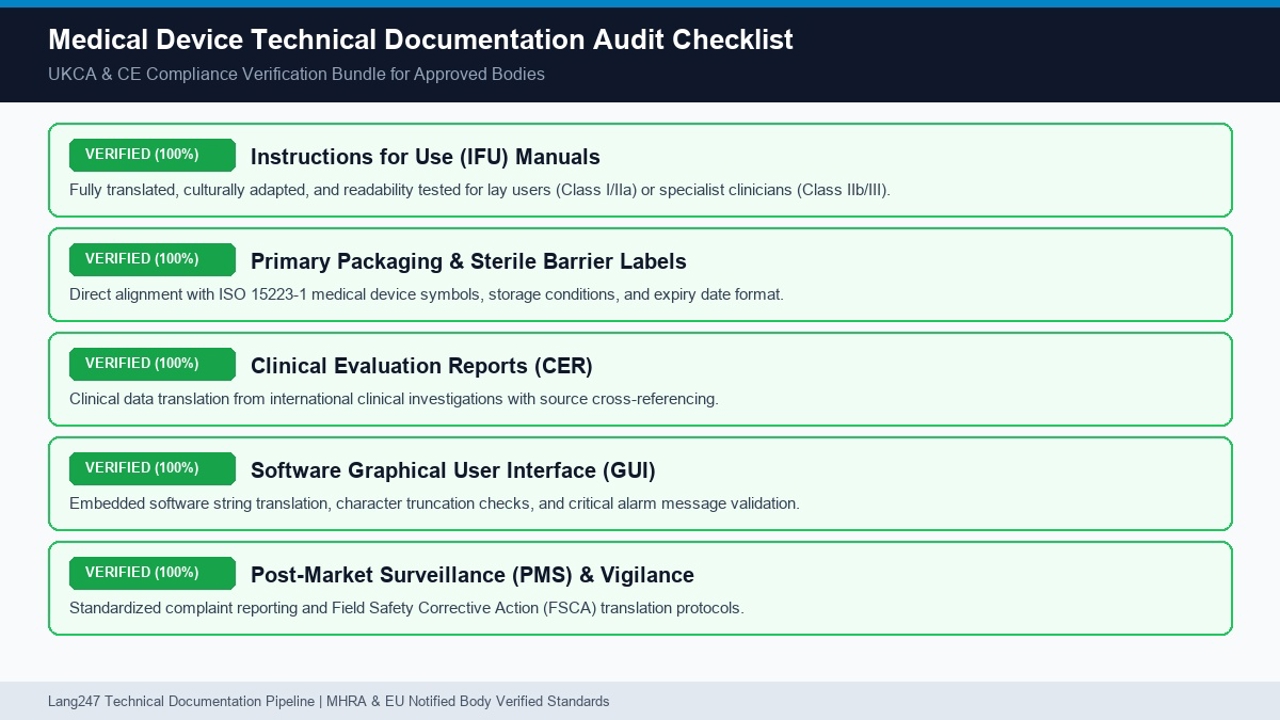
Before submitting a medical device technical file for UKCA or CE conformity assessment, manufacturers must assemble and verify an exhaustive localization bundle. The following checklist outlines the essential documents required for regulatory audit readiness:
Official Lang247 Medical Device Technical Audit Bundle
- ✔ Instructions for Use (IFU): Fully translated, artwork-verified InDesign package with layout proofing for all target territories.
- ✔ Primary and Secondary Packaging Labels: 1:1 artwork verification conforming to ISO 15223-1 symbols and national address requirements (UKRP and EC REP).
- ✔ Declaration of Conformity (DoC): Signed statutory declaration in English and target EU languages referencing applicable regulations and harmonized standards.
- ✔ Summary of Safety and Clinical Performance (SSCP): Dual-register translation (professional clinical section and lay patient section) with readability validation reports for Class III/implantable devices.
- ✔ Software Strings and GUI Resource Files: Pseudo-localization, in-context software testing logs, and alarm prompt verification certificates.
- ✔ ISO 17100 / ISO 13485 Certificates of Conformity: Formal signed certificates of linguistic accuracy issued by the accredited localization provider detailing translator credentials and quality audit trails.
14. Step-by-Step Technical Guide: How Manufacturers Manage Multilingual IFU Localization
For regulatory affairs directors, medical device project managers, and quality assurance leads, executing a compliant multilingual translation program requires structured project governance:
- Establish the Master Regulatory Dossier in Source English: Complete all design verification, clinical evaluations, and risk assessments under ISO 14971 before initiating translation. Freezing the English source text prevents costly rework across 20+ languages.
- Map Target Market Language Mandates: Consult the regulatory requirements of each intended market (such as UKCA English mandates, EU Member State national language laws, or Middle Eastern Arabic requirements). Establish a centralized language matrix.
- Implement Centralized Terminology Glossaries: Extract all product features, anatomical targets, surgical instruments, and contraindications. Map terms to GMDN, EMDN, and SNOMED CT databases and secure sign-off from your Chief Medical Officer.
- Execute ISO 17100 / ISO 13485 Translation Workflows: Assign translation and independent revision to accredited biomedical linguists with documented expertise in the specific device class.
- Conduct In-Context Formatting and DTP Verification: Format packaging artwork and IFU booklets using native graphic applications. Verify that all ISO 15223-1 symbols, warning boxes, and reference codes remain uncorrupted.
- Perform User Readability and Usability Validation: For lay-use devices and patient leaflets, conduct usability testing with representative patient groups to confirm comprehension and readability scores (such as Flesch-Kincaid Grade Level 6 to 8).
- Archive Certified Technical Documentation: Retain signed Certificates of Translation Conformity in your device Technical File ready for inspection by Approved Bodies and the MHRA.
15. Frequently Asked Questions (Medical Device Translation FAQs)
Is English sufficient for medical devices marketed across the entire European Union?
No. Under EU MDR Article 10(11), each individual EU Member State dictates the official languages required for device labeling, packaging, and Instructions for Use (IFU). While some countries (such as the Netherlands) accept English for specialized devices used exclusively by trained hospital clinicians, almost all EU nations mandate their national languages for devices intended for patient or lay use.
What are the specific language rules for UKCA marking in Great Britain?
Under the UK Medical Devices Regulations 2002 (SI 2002/618 as amended), all packaging, labeling, and user documentation supplied with devices placed on the market in Great Britain must be provided in English. If international symbols from ISO 15223-1 are utilized without harmonized text, their meaning must be defined in the English Instructions for Use.
Can electronic Instructions for Use (e-IFU) replace paper manuals in the UK and EU?
Electronic Instructions for Use are permitted under strict regulatory conditions established by Commission Implementing Regulation (EU) 2021/2226 and recognized under UK guidance. E-IFUs are generally restricted to professional-use devices (such as fixed radiological installations or surgical instruments) where an extensive risk assessment confirms patient safety is not compromised. Manufacturers must provide a paper copy free of charge upon request within seven calendar days.
What quality certification should a medical device translation agency possess?
Leading translation agencies serving the medical device industry should hold dual certification under ISO 13485:2016 (Quality Management Systems for Medical Devices) and ISO 17100:2015 (Requirements for Translation Services). This dual framework guarantees rigorous document version control, clinical risk management, and mandatory dual-linguist processing.
How does software translation differ from standard medical document translation?
Medical device software localization involves translating embedded GUI text, alarm prompts, and configuration menus within strict physical and technical constraints. Translators must prevent character truncation on digital displays, verify string concatenations, test localized builds in simulated environments, and ensure that high-priority clinical alarms comply with IEC 60601-1-8 alarm standards.
What is the role of back-translation in medical device documentation?
Back-translation involves taking a translated document and translating it back into the original language by an independent linguist who has not seen the source text. While not mandatory for every page of a low-risk user manual, back-translation is widely utilized for high-risk Class III implantable devices, surgical contraindications, and clinical trial protocols to verify absolute semantic fidelity.
How do Approved Bodies audit translation quality during technical file reviews?
Approved Body auditors inspect the manufacturer translation quality procedures, sample multilingual labeling for terminological consistency against clinical evaluation reports, verify readability testing records for lay-use devices, and confirm that the translation process adheres to the manufacturer ISO 13485 quality manual.
How quickly can emergency Field Safety Notices (FSNs) be translated?
Lang247 maintains a dedicated 24/7 medical device vigilance desk capable of translating, certifying, and formatting urgent Field Safety Notices into 20+ European and international languages within 24 to 48 hours, enabling manufacturers to comply with statutory recall notification deadlines.
How do translation memories lower localization costs for medical device manufacturers?
Translation Memory (TM) systems store previously translated and approved sentences, warnings, and technical descriptions in a secure database. When a manufacturer releases updated product revisions or expands across product families, unchanged text is automatically populated at substantial discounts (up to 70%), reducing costs while guaranteeing 100% terminology consistency.
How can I obtain a medical device translation quotation from Lang247?
You can submit your technical files, InDesign artwork, or software string resources through the Lang247 secure regulatory portal. Our biomedical engineering translation coordinators evaluate word counts, device classification, and target language requirements to provide a transparent, fixed-price quotation within 30 minutes.
